Archive for the ‘Veterans’ Category

…kick ass.
If I do say so myself.

I stumbled across this on my PC.
This was back in 1995 doing the Manchu (9th Infantry Regiment) 25 mile march. We had 12 hours to do it, we did it in 9 1/2 hours.

Yeah, that’s me leading the pack.

My calves hurt for a week after this one. Humping the yamas in Korea tends to do that.

This was close to the 18 mile mark. The previous 6 miles was all up hill.

Hooah!

If anyone recognizes themselves in this photo, drop me a line.

Infantry By God…

Posted: 19 Sep 2012 in Humor, Military, US Army, Veterans
Tags: , ,

I just like to poke fun at the other branches in the Army. I always liked this one.

There’s a saying in the Army: “There are two branches in the Army, Infantry and support, which one are you?”

In the beginning,

God created the heavens and the earth, and the INFANTRY
And God saw the INFANTRY, and that it was good, and he was pleased.

And God spake unto the INFANTRY: “Be tactical, and proficient, and rule the earth and subdue it. And have dominion over the fish in the sea, and over the birds in the heavens, and over all the key terrain.”
And the INFANTRY dwelt in the land therein.

And it came to pass that many missions were upon the INFANTRY, and they called upon their God: “Oh Lord help us, for we are weary.”
And the Lord heard their grunts and took mercy upon them, for lo, key terrain was abundant throughout the land.

And he raised up the weakest of the INFANTRY and set them on obsolete beasts of burden, and these he called CAVALRY. And the CAVALRY begat the ARMOR. And the Lord saw the ARMOR, that it was mediocre, and laughed, saying “Well, thou canst not win them all. Let them lead in case of land mines.”

And the INFANTRY and ARMOR dwelt in the land therein. But it came to pass that the INFANTRY again cried out: “Lord help us, for we are weary.”

And the Lord heard their voices and looked with favor upon them, for they were blessed.

Then God took those of the Armour with butts like base-plates and breath like sulfur and tiny, tiny pee-pees and these He made Artillery. But God saw that the Artillery, too, was mediocre and said unto Himself, “Oh well, garbage in; garbage out.”
And the Lord said unto the INFANTRY: “When it is dark, the ARTILLERY shall light your way, and when thou needest HE, WP, H & I and counter-battery fire, all this ye shall have.”

And the Lord gave the ARTILLERY big guns and said you will add dignity to what would otherwise be a vulgar brawl. And the Lord also said unto the ARTILLERY and ARMOR “Try not to hurt thyselves.”
Though the Lord cautioned the Infantry to never, never, never trust Tac-fire or any other electronic computer in the hands of the Artillery.

And the Infantry, the Armor, and the Artillery dwelt in the land therein. Then the Artillery created the Air Defense Artillery; but quickly asked forgiveness.

And the INFANTRY and the ARMOR and the ARTILLERY dwelt in the land therein. But it came to pass that the INFANTRY again called upon their God: “Lord, help us, for we are weary.”

And the Lord heard their voices so he touched those of the ARMOR and ARTILLERY who were miserly and called these FINANCE CORPS; and those who could not communicate and called these SIGNAL CORPS; and those with no friends and called these MILITARY POLICE; and those who were filled with greed and called these QUARTERMASTER; and those who played with controlled substances and called these MEDICAL CORPS; and those who hid in darkness and called these INTELLIGENCE CORPS; and those who were eternally lost and called these TRANSPORTATION CORPS; and those who played in the dirt and called these ENGINEERS; and those who had no skills at all and called these ORDNANCE.

And the Lord saw all these that he had touched, and knew that they were indeed touched. And the INFANTRY and the others dwelt in the land therein.

And it came to pass that the INFANTRY again cried out: “Lord, help us, for we are weary.”
And the Lord looked upon the INFANTRY with anger and the heavens roared with thunder and the skies burned with fire, and God spoke: “How couldst thou yet be weary? I have given unto thee ARMOR and a host of others to provide support to thee.”

Humbly the Infantry abased themselves again before their God, crying, “Lord, it is of these that we are weary!”

And the Lord looked upon the INFANTRY and smiled, and forgave them, for he understood that of which they spoke.

THEY WERE INFANTRY, BY GOD!
THANK GOD FOR THE INFANTRY

…I am proud to say that I am one of them. My time came later, but I know exactly what he’s talking about. All grunts know.

This is from Ernie Pyle, arguably the best combat writer in WW II.

IN THE FRONT LINES BEFORE MATEUR, NORTHERN TUNISIA, May 2, 1943

We’re now with an infantry outfit that has battled ceaselessly for four days and nights.

This northern warfare has been in the mountains. You don’t ride much anymore. It is walking and climbing and crawling country. The mountains aren’t big, but they are constant. They are largely treeless. They are easy to defend and bitter to take. But we are taking them.

The Germans lie on the back slope of every ridge, deeply dug into foxholes. In front of them the fields and pastures are hideous with thousands of hidden mines. The forward slopes are left open, untenanted, and if the Americans tried to scale these slopes they would be murdered wholesale in an inferno of machine-gun crossfire plus mortars and grenades.

Consequently we don’t do it that way. We have fallen back to the old warfare of first pulverizing the enemy with artillery, then sweeping around the ends of the hill with infantry and taking them from the sides and behind.

I’ve written before how the big guns crack and roar almost constantly throughout the day and night. They lay a screen ahead of our troops. By magnificent shooting they drop shells on the back slopes. By means of shells timed to burst in the air a few feet from the ground, they get the Germans even in their foxholes. Our troops have found that the Germans dig foxholes down and then under, trying to get cover from the shell bursts that shower death from above.

Our artillery has really been sensational. For once we have enough of something and at the right time. Officers tell me they actually have more guns than they know what to do with.

All the guns in any one sector can be centered to shoot at one spot. And when we lay the whole business on a German hill the whole slope seems to erupt. It becomes an unbelievable cauldron of fire and smoke and dirt. Veteran German soldiers say they have never been through anything like it.

Now to the infantry—the God-damned infantry, as they like to call themselves.

I love the infantry because they are the underdogs. They are the mud-rain-frost-and-wind boys. They have no comforts, and they even learn to live without the necessities. And in the end they are the guys that wars can’t be won without.

I wish you could see just one of the ineradicable pictures I have in my mind today. In this particular picture I am sitting among clumps of sword-grass on a steep and rocky hillside that we have just taken. We are looking out over a vast rolling country to the rear.

A narrow path comes like a ribbon over a hill miles away, down a long slope, across a creek, up a slope and over another hill.

All along the length of this ribbon there is now a thin line of men. For four days and nights they have fought hard, eaten little, washed none, and slept hardly at all. Their nights have been violent with attack, fright, butchery, and their days sleepless and miserable with the crash of artillery.

The men are walking. They are fifty feet apart, for dispersal. Their walk is slow, for they are dead weary, as you can tell even when looking at them from behind. Every line and sag of their bodies speaks their inhuman exhaustion.

On their shoulders and backs they carry heavy steel tripods, machine-gun barrels, leaden boxes of ammunition. Their feet seem to sink into the ground from the overload they are bearing.

They don’t slouch. It is the terrible deliberation of each step that spells out their appalling tiredness. Their faces are black and unshaven. They are young men, but the grime and whiskers and exhaustion make them look middle-aged.

In their eyes as they pass is not hatred, not excitement, not despair, not the tonic of their victory—there is just the simple expression of being here as though they had been here doing this forever, and nothing else.

The line moves on, but it never ends. All afternoon men keep coming round the hill and vanishing eventually over the horizon. It is one long tired line of antlike men.

There is an agony in your heart and you almost feel ashamed to look at them. They are just guys from Broadway and Main Street, but you wouldn’t remember them. They are too far away now. They are too tired. Their world can never be known to you, but if you could see them just once, just for an instant, you would know that no matter how hard people work back home they are not keeping pace with these infantrymen in Tunisia.

Hooah.

…ships to honor veterans at their convention. That’s pretty pathetic. It takes all of .03 seconds for Bing to return US Navy Ship pictures.
And the first one up is the USS George Washington CVN 73.
Bad form dummycrats. Bad form indeed.

The picture gets HUGE if clicked.

…ended today in 1945.
A great victory by a great generation.
How soon we forget.

Thank you to all the World War II Veterans.

Many men and women lost their lives to preserve our freedom.

On this day in 1945, the USS Missouri hosts the formal surrender of the Japanese government to the Allies. Victory over Japan was celebrated back in the States.

As Japanese troops finally surrendered to Americans on the Caroline, Mariana, and Palau islands, representatives of their emperor and prime minister were preparing to formalize their capitulation. In Tokyo Bay, aboard the Navy battleship USS Missouri, the Japanese foreign minister, Mamoru Shigemitsu, and the chief of staff of the Japanese army, Yoshijiro Umezu, signed the “instrument of surrender.” Representing the Allied victors was Gen. Douglas MacArthur, commander of the U.S. Army forces in the Pacific, and Adm. Chester Nimitz, commander of the U.S. Pacific Fleet, now promoted to the newest and highest Navy rank, fleet admiral. Among others in attendance was Lt. Gen. Jonathan Wainwright, who had taken command of the forces in the Philippines upon MacArthur’s departure and had been recently freed from a Japanese POW camp in Manchuria.

More

A color video of the celebrations in Hawaii:

…piece of shit Democrats and the douche bags that support these fuckwits can go straight to hell, every fucking one of them.

Here’s a mother of a SEAL that was KIA responding to that POS Clinton and Obama.
Clinton said it, Obuttmunch used it in an ad.

To all of our World War II Veterans, a most profound and heartfelt thank you for your service and sacrifice for freedom. Without your dedication and stalwart  stand against tyranny, the world as we know it today wouldn’t exist.

Thank you one and all.

Go have a look over at War on Terror News:

August 14, 1945: Victory Over Japan; Video: Post WWII

The defeat of Imperial Japan & Nazi Germany may have ended the shooting wars, but it was not the end of Our Commitment, and it wasn’t the end of dangers. Whole German and Japanese cities had been destroyed by allied bombs, but while we rebuilt our future allies, the Communists oppressed our future enemies.

More

Since the SCOTUS is apparently chock full of morons, the Stolen Valor Act was declared unconstitutional on the grounds that it had something to do with “free speech.”

How some asshole that has never served a day, or just felt that he didn’t do enough when he was in, and now needs to pretend he’s a SEAL, SF, Ranger, Marine or whatever constitutes “free speech” is beyond me.

It’s disgusting to think that some asshole is reaping the benefits of something not earned. It’s a slap in the face of EVERY Soldier, Sailor, Airman, Marine, or Coast Guardsman, both living and deceased.

Bad call SCOTUS. Bad call.

Over at This ain’t Hell there this gem of a post, free speech.

Stolen Valor Tournament

This is travesty. A nation that treats it’s Soldiers in this manner doesn’t deserve to be a nation. There are a couple things wrong with this in regards to the Constitution alone, never mind simple common sense.

First there’s the issue of the Second Amendment. It is constantly being violated by the District of Columbia, in that they do everything in their illegal power to confiscate, or prevent gun ownership. And I thought California was bad.

Then there’s the issue of the Fourth Amendment. Yeah, the one that states: “The right of the people to be secure in their persons, houses, papers, and effects, against unreasonable searches and seizures, shall not be violated, and no warrants shall issue, but upon probable cause, supported by oath or affirmation, and particularly describing the place to be searched, and the persons or things to be seized.”

The MPD violated this one straight up.

If it were me they did this to, they’d put my name over the MPD HQ when I was done with them.

This is a series of articles on this by Emily Miller, here’s the first:

MILLER: Iraq vet brutalized over guns in D.C.

The Metropolitan Police Department (MPD) seems to have it out for our military. The department is using the city’s pointless firearm registration mandate to harass, arrest and jail servicemen.

Army 1st Sergeant Matthew Corrigan was woken in the middle of the night, forced out of his home, arrested, had his home ransacked, had his guns seized and was thrown in jail — where he was lost in the prison system for two weeks — all because the District refuses to recognize the meaning of the Second Amendment. This week, the city dropped all charges against Sgt. Corrigan, but the damage done to this reservist cannot be so easily erased.

This story will describe how Sgt. Corrigan went from sleeping at home at night to arrested. Subsequent installments of the series will cover the home raid without a warrant, the long-term imprisonment and the coverup by MPD.

More

There’s a link to the next one in the series. There are three at the moment.

MILLER: SWAT rampage destroys Iraq vet’s home over guns

MILLER: Iraq vet jailed two weeks for guns

Today is the birthday of the 1st Infantry Division. The Big Red One. It is the oldest continuously active division in the Army. To my fellow Big Red One Veterans, happy birthday to a great Division and to all who have served in the Big Red One, her history includes you. Well done and congratulations!

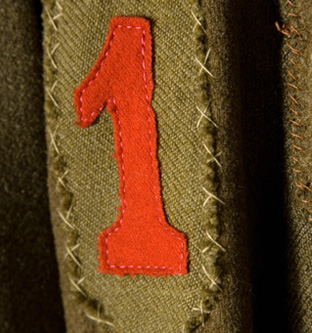
The 1st Infantry Division Patch World War I

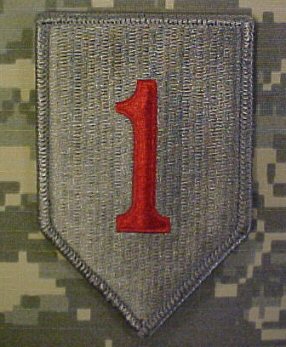
1st Infantry Division Patch Modern Day

World War I

The First Expeditionary Division was constituted in May 1917 from Army units then in service on the Mexican border and at various Army posts throughout the United States. On June 8, 1917 it was officially organized in New York, New York. This date is the 1st Infantry Division’s official birthday. The first units sailed from New York and Hoboken, N.J., June 14, 1917. Throughout the remainder of the year, the rest of the Division followed, landing at St. Nazaire, France, and Liverpool, England. After a brief stay in rest camps, the troops in England proceeded to France, landing at Le Havre. The last unit arrived in St. Nazaire on Dec. 22. Upon arrival in France, the Division, less its artillery, was assembled in the First (Gondrecourt) training area, and the artillery was at Le Valdahon.

On the 4th of July, the 2nd Battalion, 16th Infantry, paraded through the streets of Paris to bolster the sagging French spirits. At Lafayette’s tomb, one of General Pershing’s staff uttered the famous words, “Lafayette, we are here!” Two days later, July 6, the First Expeditionary Division was redesignated the First Infantry Division. On the morning of Oct. 23, the first American shell of the war was sent screaming toward German lines by Battery C, 6th Field Artillery. Two days later, the 2nd Bn., 16th Inf., suffered the first American casualties of the war.

By April 1918, the Germans had pushed to within 40 miles of Paris. In reaction to this thrust, the Big Red One moved into the Picardy Sector to bolster the exhausted French First Army. To the Division’s front lay the small village of Cantigny, situated on the high ground overlooking a forested countryside. It was the 28th Infantry, who attacked the town, and within 45 minutes captured it along with 250 German soldiers, thus earning the special designation “Lions of Cantigny” for the regiment. The first American victory of the war was a First Division victory.

The First Division took Soissons in July 1918. The Soissons victory was costly – more than 7000 men were killed or wounded. The First Infantry Division then helped to clear the St. Mihiel salient by fighting continuously from Sept. 11-13, 1918. The last major World War I battle was fought in the Meuse-Argonne Forest. The Division advanced seven kilometers and defeated, in whole or part, eight German divisions. This action cost the 1st Division over 7600 casualties. In October 1918, the Big Red One patch as it is now known was officially approved for wear by members of the Division.

The war was over when the Armistice was signed on November 11, 1918. The Division was then located at Sedan, the farthest American penetration of the war. The Division was the first to cross the Rhine into occupied Germany where it remained until the peace treaty formally ending WW I was signed. It deployed back to the United States in August and September.

By the end of the war, the Division had suffered 22,668 casualties and boasted five Medal of Honor recipients. Its colors carry campaign streamers for: Montdidier-Noyon; Aisne-Marne; St. Mihiel; Meuse- Argonne; Lorraine1 917; Lorraine, 1918; Picardy, 1918.

World War II

On On August 1, 1942, the first Division was reorganized and redesignated as the 1st Infantry Division.

The 1st Infantry Division entered combat in World War II as part of “Operation Torch”, the invasion of North Africa, the first American campaign against the Axis powers. On Nov. 8, 1942, following training in the United Kingdom, men of the First Division landed on the coast of Algeria near Oran. The initial lessons of combat were harsh and many men were casualties in the campaign that followed and which stretched from Algiers into Tunisia. On May 9, 1943, the commander of the German “Afrika Korps” surrendered his force of 40,000 and North African operations for the Big Red One ended. The Division then moved on to take Sicily in “Operation Husky.” It stormed ashore at Gela, July 10, 1943, and quickly overpowered the Italian defenses. Soon after, the Division came face-to-face with 100 tanks of the Herman Goering Tank Division. With the help of naval gunfire, its own artillery and Canadian allies, the First Infantry Division fought its way over the island’s hills, driving the enemy back. The Fighting First advanced on to capture Troina and opened the Allied road to the straits of Messina. On D-Day, June 6, 1944, the Big Red One stormed ashore at Omaha Beach. Soon after H-Hour, the Division’s 16th Infantry Regiment was fighting for its life on a strip of beach near Coleville-sur-Mer that had been marked the “Easy Red” on battle maps. As the assault progressed, the beach became so congested with destroyed equipment, the dead and the wounded, that there was little room to land reinforcements. Col. George Taylor, commander of the 16th Infantry Regt., told his men, “Two kinds of people are staying on this beach! The dead and those who are going to die! Now, let’s get the hell out of here!” Slowly, spurred by the individual heroism of many individuals, the move inland got underway.

A German blockhouse above the beach became a command post named “Danger Forward.”

After the beachhead was secured, the Division moved through the Normandy Hedgerows. The Division liberated Liege, Belgium, and pushed to the German border, crossing through the fortified Siegfried line. The 1st Inf. Div. attacked the first major German city, Aachen, and after many days of bitter house-to house fighting, the German commander surrendered the city on Oct. 21, 1944.

The Division continued its push into Germany, crossing the Rhine River. On Dec. 16, 24 enemy divisions, 10 of which were armored, launched a massive counterattack in the Ardennes sector, resulting in what became known as the Battle of the Bulge. The Big Red One held the critical shoulder of the “Bulge” at Bullingen, destroying hundreds of German tanks in the process. On Jan. 15, 1945, the First Infantry attacked and penetrated the Siegfried line for the second time and occupied the Remagen bridgehead. On Easter Sunday, April 1, 1945, the Division marched 150 miles to the east of Siegen. On April 8, the Division crossed the Weser River into Czechoslovakia. The war was over May 8, 1945.

At the end of World War II, the Division had suffered 21,023 casualties and 43,743 men had served in its ranks. Its soldiers had won a total of 20,752 medals and awards, including 16 Congressional Medals of Honor. Over 100,000 prisoners had been taken.
Following the war, the First Division remained in Germany as occupation troops, until 1955, when the Division moved to Fort Riley, Kan.


You can read the rest of the Division’s history here: Society of the First Infantry Division