Posts Tagged ‘US Army’

…220 Marines, 18 Sailors and three Soldiers, were killed and sixty Americans were injured when a truck bomb disguised as a water truck detonated outside the Marine barracks in Beirut, Lebanon.

RIP brothers.

1983 BEIRUT BARRACKS BOMBING

The 1983 Beirut barracks bombing was a major incident on October 23, 1983, during the Lebanese Civil War. Two truck bombs struck buildings in Beirut housing U.S. and French members of the Multinational Force in Lebanon, killing hundreds of soldiers, the majority being U.S. Marines. The blasts led to the withdrawal of the international peacekeeping force from Lebanon, where they had been stationed since the Israeli 1982 invasion of Lebanon.

The bombing

On October 23 1983, around 6:20 am, a yellow Mercedes-Benz truck drove to Beirut International Airport, where the 1st Battalion 8th Marines, under the U.S. 2nd Marine Division of the United States Marine Corps, had set up its local headquarters. The truck had been substituted for a hijacked water delivery truck. The truck turned onto an access road leading to the Marines’ compound and circled a parking lot. The driver then accelerated and crashed through a barbed wire fence around the parking lot, passed between two sentry posts, crashed through a gate and barreled into the lobby of the Marine headquarters. The Marine sentries at the gate were operating under their rules of engagement, which made it very difficult to respond quickly to the truck. By the time the two sentries had locked, loaded, and shouldered their weapons, the truck was already inside the building’s entry way.

More

…report to Fiddler’s Green!

America has lost a true icon of leadership and a great Soldier.
This is a little late, but I’m not letting it slip by unnoticed.

Rest in peace Sergeant Major. Your mission is accomplished.

Enjoy the company of your brothers in arms at Fiddler’s Green.

Here’s the obituary:

CSM (ret.) Basil L. Plumley
January 1, 1920-
October 10, 2012

Columbus, Georgia- CSM Basil L. Plumley, 92, died Wednesday October 10, 2012 at the Columbus Hospice House, Columbus, Georgia.

Funeral services with Military Honors will be held 1:00 p.m. Tuesday October 16, 2012 in the Infantry Center Chapel, Ft. Benning, Georgia with burial to follow in the Main Post Cemetery, Ft. Benning, Georgia according to Striffler-Hamby Mortuary, Columbus, Georgia. The family will receive friends Monday from 10:00 a.m. to 8:00 p.m. at the funeral home.

CSM Plumley was born in Blue Jay, West Virginia, the second son and fifth child of an electrician Clay Plumley and his wife Georgia, both of West Virginia stock. Plumley was also preceded in death by his wife, Deurice who died on May 28, 2012, his grandson, Kenneth Kimble, two brothers and three sisters.

He is well known for his actions as Sergeant Major of the 1st Battalion, 7th Cavalry Regiment, at the Battle of Ia Drang (1965). General Hal Moore praised Plumley as an outstanding NCO and leader in the book We Were Soldiers Once…And Young. The sergeant major was known affectionately by his Soldiers as “Old Iron Jaw.”

Plumley enlisted in the U.S. Army on March 31, 1942 as a private, having completed two years of high school. His civilian occupation was listed as semiskilled chauffeur/driver of bus, taxi, truck, or tractor.

Plumley is a veteran of World War II, the Korean War and the Vietnam War. During World War Two, Plumley made four combat jumps with the 82ND Airborne Division: OPERATION HUSKY (Sicily), OPERATION AVALANCHE (Salerno), OPERATION NEPTUNE (Normandy), and OPERATION MARKET GARDEN (Holland). He also made one combat jump in Korea with the 187th Airborne Infantry Regiment in the Battle of Yongju.

He retired as a command sergeant major on December 31, 1974. After his retirement he worked 15 years for the Army at Martin Army Community Hospital as a civilian and retired again in 1990.

Plumley’s awards and decorations include the Silver Star (one Oak Leaf Cluster), Legion of Merit, Bronze Star (one Oak Leaf Cluster and Valor Device), Purple Heart (three Oak Leaf Clusters), Air Medal (one silver and three bronze Oak Leaf Clusters), Army Presidential Unit Citation (two Oak Leaf Clusters), Army Commendation Medal, American Defense Service Medal, American Campaign Medal, Word War II Victory Medal, Korean Service Medal (with Arrowhead device and three campaign stars), Vietnam Service Medal (with one silver and three bronze campaign stars), Armed Forces Expeditionary Medal, Republic of Korea Presidential Unit Citation, Republic of Korea War Service Medal, United Nations Service Medal for Korea, Vietnam Gallantry Cross Unit Citation with Palm, Vietnam Campaign Medal, Master Combat Parachutist Badge (with gold star, indicating 5 combat jumps), Vietnam Army Basic Parachutist Badge, and the Order of St. Maurice. He is one of only 324 known recipients of the third award of the Combat Infantry Badge .

CSM Plumley received the “Doughboy Award” in 1999. The Doughboy Award is presented annually to recognize an individual for outstanding contributions to the United States Army Infantry. The award is presented on behalf of all Infantrymen past and present.

He was portrayed by Sam Elliott in the film We Were Soldiers.

Survivors include his daughter, Debbie Kimble, his granddaughter, Carrie Brown and her husband Jeff, his great grandchildren, Carson Brown, Jackson Brown, numerous nieces and nephews.
Flowers will be appreciated and donations may be made to National Infantry Foundation, 1775 Legacy Way, Suite 220, Columbus, Georgia 31903 or those wishing to donate online can do so at www.nationalinfantrymuseum.com in honor of CSM (R) Basil Plumley or to the Columbus Hospice Inc. , 7020 Moon Road, Columbus, Georgia 31909 or those wishing to donate online can do so at www.columbushospice.com in honor of CSM (R) Basil Plumley.

…Dakota Meyer has a new book out that goes after the Army brass for their failure during the battle at Ganjgal in Kunar Province, Afghanistan where he fought and was eventually awarded the MOH for his actions.

There is a US Army Captain, Will Swenson that was there and was submitted for a MOH for his actions that day as well, but the Army in their typical handling of paperwork seems to have lost the packet.

I am pissed off that the Army hasn’t done more to correct a horrible injustice and am not surprised that the actions of a couple morons in the TOC out of 10th Mountain’s 1-32 Infantry screwed the pooch on this. An over zealous captain adhering to a moronic ROE is likely the issue with them not getting the artillery support that they so badly needed. I wasn’t there, but 20 years in the Army and some of that in a TOC environment, can sure make for some educated guesses.

The inaction of a couple officers, and I dare say some NCOs that were in all likelihood there in the TOC may well have cost the lives of a some Marines. This in my mind is shameful and an absolute embarrassment for the Army. I thought 10th Mountain was better than that.

At any rate, go read this, it’s important to know what went on at this battle, the good and the bad.

Dakota Meyer blasts Army brass in new book
By Dan Lamothe – Staff writer

WEST MILFORD, N.J. — During one of the Afghan war’s ugliest battles, Medal of Honor recipient Dakota Meyer was nearly taken prisoner at gunpoint but fended off his would-be captor by beating him to death with a baseball-sized rock, according to the Marine’s forthcoming book.

That is among several revelations in “Into the Fire: A Firsthand Account of the Most Extraordinary Battle in the Afghan War.” It chronicles the disastrous Sept. 8, 2009, battle in Ganjgal, a mountainside village in Kunar province where U.S. Marines and soldiers, and their Afghan counterparts, were pinned down under fire for hours. The book, due to be released Sept. 25, is co-authored by Meyer and Bing West, a best-selling writer and former Marine infantryman.

Throughout the book, Meyer, a sergeant in the Marine Corps Individual Ready Reserve, takes aim at several targets — especially the Army officers he blames for allowing members of his team to die that day. He describes perceived flaws in the mission’s planning, outlines how officers at a nearby base refused to send help and questions why an Army captain who fought alongside him, Will Swenson, still hasn’t received any valor award despite being recommended for the Medal of Honor nearly three years ago.

More

…for an anti-suicide nasal spray.

If this helps the troops, then I’m all for it.

There are too many suicides by military personnel lately. It’s not a comforting statistic.

US Army grants $3 million for anti-suicide nasal spray research

For those feeling down in the dumps, the US military now has a solution: an anti-suicidal nasal spray that delivers antidepressant chemicals to the brain.

­The US Army has awarded a scientist at the Indiana University School of Medicine $3 million to develop a nasal spray that eclipses suicidal thoughts. Dr. Michael Kubek and his research team will have three years to ascertain whether the nasal spray is a safe and effective method of preventing suicides.

The research grant comes after the Army lost 38 of its soldiers to suspected suicide in July, setting a record high. So far in 2012, the Army has confirmed 66 active duty suicides and is investigating 50 more, making a total of 116 cases.

The Army’s suicide rate is at the highest level in history, with more American soldiers taking their own lives than being killed by the Taliban. The Pentagon reported in June that suicides among soldiers averaged one per day this year, surpassing the rate of combat fatalities.

via US Army grants $3 million for anti-suicide nasal spray research — RT.

…flies over New Jersey on its first flight.

I think we probably could have spent hundreds of millions of dollars on something a little more practical, but the technology is cool, and it will provide a long term solution to keeping an eye on the bad guys.

Army’s Giant Spy Blimp Soars Over Jersey Shore in First Flight
By David Axe

On Tuesday, not far from the beaches of New Jersey, was a sight hundreds of millions of dollars and years of development in the making: the Army’s football-field-size robot spy blimp took to the air for the first time at a military base in Lakehurst. The 90-minute flight of the Long-Endurance Multi-Intelligence Vehicle (LEMV), manufactured by U.K. firm Hybrid Air Vehicles and U.S. aerospace giant Northrop Grumman and allegedly captured in the video above, is only the beginning of a months-long test program; the lighter-than-air ship won’t head to a warzone until next year at the earliest. But it’s still important news. For years, the Pentagon has tried and failed to get next-generation airships off the ground. No longer.

“The first flight primary objective was to perform a safe launch and recovery with a secondary objective to verify the flight control system operation,” Army spokesman John Cummings said in a statement. “Additional first flight objectives included airworthiness testing and demonstration, and system level performance verification.”

More

…for the upcoming elections.

Looks like the government is starting to gear up for riots when Obama loses in November. It’s not surprising to me, but it is telling.

Enjoy what’s left of your freedoms, if by some unforeseen event, Obama wins, then freedom is pretty much a fantasy.

DHS gears up for civil unrest prior to presidential elections

The Department of Homeland Security has ordered masses of riot gear equipment to prepare for potential significant domestic riots at the Republican National Convention, Democratic National Convention and next year’s presidential inauguration.

The DHS submitted a rushed solicitation to the Federal Business Opportunities site on Wednesday, which is a portal for Federal government procurement requisitions over $25,000. The request gave the potential suppliers only one day to submit their proposals and a 15-day delivery requirement to Alexandria, Virginia.

As the brief explains, “the objective of this effort is to procure riot gear to prepare for the 2012 Democratic and Republican National Conventions, the 2013 Presidential Inauguration and other future similar activities.”

The total amount ordered is about 150 sets of riot helmets, thigh and groin protectors, hard-shell shin guards and other riot gear.

via DHS gears up for civil unrest prior to presidential elections — RT.

In related news, the Army is also ordering gearL

U.S. Army Purchases Riot Gear As Fears Over Civil Unrest Grow

Paul Joseph Watson
It’s not just the Department of Homeland Security that is gearing up for the prospect of civil unrest in America. The U.S. Army also recently purchased a stock of riot gear including batons, face masks and body shields.

As we reported last week, the DHS has put out an urgent solicitation for hundreds of items of “riot gear,” in preparation for expected unrest at the upcoming Republican National Convention, Democratic National Convention and next year’s presidential inauguration.

In a previous solicitation, the U.S. Army also put out a contract for riot gear to be delivered to the United States Military Academy at West Point in New York.

More

MEDEVAC Issue…

Posted: 19 Jul 2012 in Failure, Military, US Army
Tags: , ,

…is still an issue, but as with all things, truth shines a bright light and is having an effect on the Army’s MEDEVAC community,

Here’s Michael Yon’s take on it:

Military Professionals Discussing the MEDEVAC Dilemma: Armed or Escorted?

Increasing numbers of high-ranking military officers and veterans agree that the time has come for change.  Support from lawmakers continues to grow.  Army helicopter medical evacuation (Dustoff) polices are outdated and costing lives.  Our current polices even violate the Geneva Conventions.  The Dustoff Association is seeing this for what it is, and has featured the matter in their latest “The DUSTOFFer” newsletter.

Note: The military recently completed its investigation into the loss of Chazray Clark in Afghanistan last September.  The Pentagon now admits that it took 69 minutes from time of injury until Chazray was delivered to the hospital.  With better policies, that evacuation could have been completed in about 24 minutes.  We lost Chazray.  Let’s stop this now.

More

Here’s to another 237 years! Hooah!

Well done to all that have been a part of this storied organization.

Birth of the U.S. Army

Founded June 14, 1775

Two hundred and thirty-seven years ago, our Nation’s leaders established the Continental Army, beginning a rich heritage of successfully defending this great country and her citizens. Today, we celebrate the continued honor, loyalty and bravery of our Soldiers in this noble calling. Our Soldiers remain Army Strong with a deep commitment to our core values and beliefs. This 237th birthday commemorates America’s Army – Soldiers, families and civilians – who are achieving a level of excellence that is truly Army Strong. We also celebrate our local communities for their steadfast support of our Soldiers and families. We are “America’s Army: The Strength of the Nation.”

History

When the American Revolution broke out, the rebellious colonies did not possess an army in the modern sense. Rather, the revolutionaries fielded an amateur force of colonial troops, cobbled together from various New England militia companies. They had no unified chain of command, and although Artemas Ward of Massachusetts exercised authority by informal agreement, officers from other colonies were not obligated to obey his orders. The American volunteers were led, equipped, armed, paid for, and supported by the colonies from which they were raised.

In the spring of 1775, this “army” was about to confront British troops near Boston, Massachusetts. The revolutionaries had to re-organize their forces quickly if they were to stand a chance against Britain’s seasoned professionals…

More

Today is the birthday of the 1st Infantry Division. The Big Red One. It is the oldest continuously active division in the Army. To my fellow Big Red One Veterans, happy birthday to a great Division and to all who have served in the Big Red One, her history includes you. Well done and congratulations!

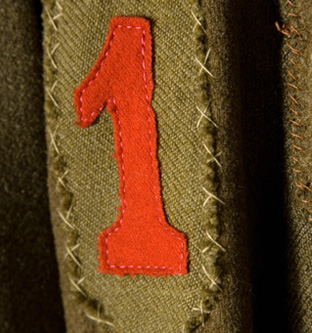
The 1st Infantry Division Patch World War I

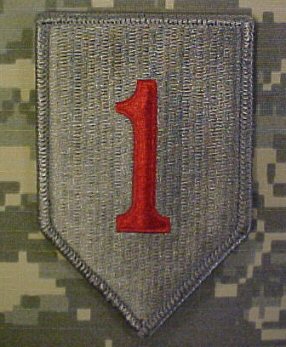
1st Infantry Division Patch Modern Day

World War I

The First Expeditionary Division was constituted in May 1917 from Army units then in service on the Mexican border and at various Army posts throughout the United States. On June 8, 1917 it was officially organized in New York, New York. This date is the 1st Infantry Division’s official birthday. The first units sailed from New York and Hoboken, N.J., June 14, 1917. Throughout the remainder of the year, the rest of the Division followed, landing at St. Nazaire, France, and Liverpool, England. After a brief stay in rest camps, the troops in England proceeded to France, landing at Le Havre. The last unit arrived in St. Nazaire on Dec. 22. Upon arrival in France, the Division, less its artillery, was assembled in the First (Gondrecourt) training area, and the artillery was at Le Valdahon.

On the 4th of July, the 2nd Battalion, 16th Infantry, paraded through the streets of Paris to bolster the sagging French spirits. At Lafayette’s tomb, one of General Pershing’s staff uttered the famous words, “Lafayette, we are here!” Two days later, July 6, the First Expeditionary Division was redesignated the First Infantry Division. On the morning of Oct. 23, the first American shell of the war was sent screaming toward German lines by Battery C, 6th Field Artillery. Two days later, the 2nd Bn., 16th Inf., suffered the first American casualties of the war.

By April 1918, the Germans had pushed to within 40 miles of Paris. In reaction to this thrust, the Big Red One moved into the Picardy Sector to bolster the exhausted French First Army. To the Division’s front lay the small village of Cantigny, situated on the high ground overlooking a forested countryside. It was the 28th Infantry, who attacked the town, and within 45 minutes captured it along with 250 German soldiers, thus earning the special designation “Lions of Cantigny” for the regiment. The first American victory of the war was a First Division victory.

The First Division took Soissons in July 1918. The Soissons victory was costly – more than 7000 men were killed or wounded. The First Infantry Division then helped to clear the St. Mihiel salient by fighting continuously from Sept. 11-13, 1918. The last major World War I battle was fought in the Meuse-Argonne Forest. The Division advanced seven kilometers and defeated, in whole or part, eight German divisions. This action cost the 1st Division over 7600 casualties. In October 1918, the Big Red One patch as it is now known was officially approved for wear by members of the Division.

The war was over when the Armistice was signed on November 11, 1918. The Division was then located at Sedan, the farthest American penetration of the war. The Division was the first to cross the Rhine into occupied Germany where it remained until the peace treaty formally ending WW I was signed. It deployed back to the United States in August and September.

By the end of the war, the Division had suffered 22,668 casualties and boasted five Medal of Honor recipients. Its colors carry campaign streamers for: Montdidier-Noyon; Aisne-Marne; St. Mihiel; Meuse- Argonne; Lorraine1 917; Lorraine, 1918; Picardy, 1918.

World War II

On On August 1, 1942, the first Division was reorganized and redesignated as the 1st Infantry Division.

The 1st Infantry Division entered combat in World War II as part of “Operation Torch”, the invasion of North Africa, the first American campaign against the Axis powers. On Nov. 8, 1942, following training in the United Kingdom, men of the First Division landed on the coast of Algeria near Oran. The initial lessons of combat were harsh and many men were casualties in the campaign that followed and which stretched from Algiers into Tunisia. On May 9, 1943, the commander of the German “Afrika Korps” surrendered his force of 40,000 and North African operations for the Big Red One ended. The Division then moved on to take Sicily in “Operation Husky.” It stormed ashore at Gela, July 10, 1943, and quickly overpowered the Italian defenses. Soon after, the Division came face-to-face with 100 tanks of the Herman Goering Tank Division. With the help of naval gunfire, its own artillery and Canadian allies, the First Infantry Division fought its way over the island’s hills, driving the enemy back. The Fighting First advanced on to capture Troina and opened the Allied road to the straits of Messina. On D-Day, June 6, 1944, the Big Red One stormed ashore at Omaha Beach. Soon after H-Hour, the Division’s 16th Infantry Regiment was fighting for its life on a strip of beach near Coleville-sur-Mer that had been marked the “Easy Red” on battle maps. As the assault progressed, the beach became so congested with destroyed equipment, the dead and the wounded, that there was little room to land reinforcements. Col. George Taylor, commander of the 16th Infantry Regt., told his men, “Two kinds of people are staying on this beach! The dead and those who are going to die! Now, let’s get the hell out of here!” Slowly, spurred by the individual heroism of many individuals, the move inland got underway.

A German blockhouse above the beach became a command post named “Danger Forward.”

After the beachhead was secured, the Division moved through the Normandy Hedgerows. The Division liberated Liege, Belgium, and pushed to the German border, crossing through the fortified Siegfried line. The 1st Inf. Div. attacked the first major German city, Aachen, and after many days of bitter house-to house fighting, the German commander surrendered the city on Oct. 21, 1944.

The Division continued its push into Germany, crossing the Rhine River. On Dec. 16, 24 enemy divisions, 10 of which were armored, launched a massive counterattack in the Ardennes sector, resulting in what became known as the Battle of the Bulge. The Big Red One held the critical shoulder of the “Bulge” at Bullingen, destroying hundreds of German tanks in the process. On Jan. 15, 1945, the First Infantry attacked and penetrated the Siegfried line for the second time and occupied the Remagen bridgehead. On Easter Sunday, April 1, 1945, the Division marched 150 miles to the east of Siegen. On April 8, the Division crossed the Weser River into Czechoslovakia. The war was over May 8, 1945.

At the end of World War II, the Division had suffered 21,023 casualties and 43,743 men had served in its ranks. Its soldiers had won a total of 20,752 medals and awards, including 16 Congressional Medals of Honor. Over 100,000 prisoners had been taken.
Following the war, the First Division remained in Germany as occupation troops, until 1955, when the Division moved to Fort Riley, Kan.


You can read the rest of the Division’s history here: Society of the First Infantry Division

This is a preamble to Memorial Day. I’ll post more about it when I can. It sometimes hard for me to do this. I lost a friend in Iraq in 2006, so this is always personal.

This comes from Allen West.

Where will you be at 3:00 P.M. on Memorial Day?

Our steadfast and loyal heroes deserve remembrance
by Allen West

The solemn act of honoring those who have fallen in battle is a custom that seems to have faded in importance to our nation over time.

Nowadays, many Americans have forgotten the meaning and traditions of Memorial Day. At cemeteries across the country, the graves of the fallen are sadly ignored, and worse, neglected.

While there are towns and cities still planning Memorial Day parades, many have not held a parade in decades. Some think the day is for honoring anyone who has died, not just those fallen in service to our country.

Perhaps they do not know how deeply our nation once appreciated those who sacrificed their lives in defense of the principles we hold most dear. Perhaps those very principles of individual sovereignty, freedom and liberty are no longer so important.

It was not always so.

More